


-

Erin Donahue -

Christina Barkanic -

Brittany Trott -

Emily Wiley -

Jessica Reilley -

Chris Raines -

Will Nichols -

Emily Reddy -

Michele Marchetti -

Michele Frank -

James Gherardi -

Kit Henshaw -

Christina and Erin -

Kim Tait -

Erin McKinney -

Steve Spanelli -

Sam Komlenic -

Katherine Taylor Grofic -

James Eisenstein -

Jamie Oberdick -

Anna Lombardo -

LacCreta Holland -

Tony Ricci -

Local Food Journey -

Laura Young -

Kristin Camplese -

Harrison's Fresh + Local -

Danielle Matalonis -

Kristine A. -

Linda Weaver -

Naomi Elle Schwartz -

Dana Stuchul -

Cara McShane -

Brittany Smith -

Jessica Illuzzi - Frosty
-

Jessica Paholsky -

James Sechrengost -

Brad Yeckley -

Maya Althouse -

Jordan Reabold -

Kim Chase -

Maria Bryant - Alexandrea Scott
Get your garden ready for a long winter’s nap
Posted by Jamie Oberdick on 10/21, 2011 at 05:59 AM
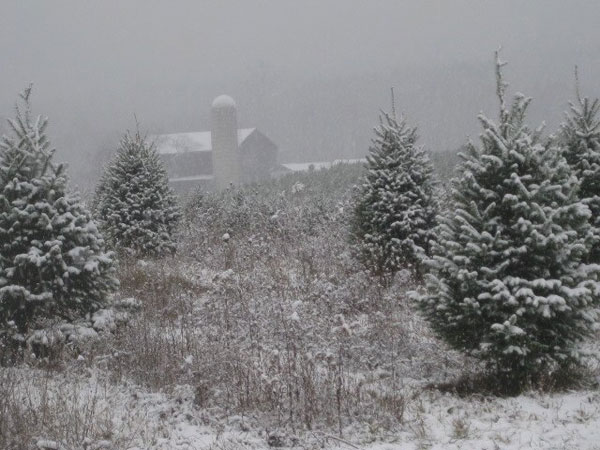
Get your garden prepared for winter now, as scenes like this are just around the corner.
While we haven’t quite yet had a true killing frost, it’s inevitable - at some point, your 2011 garden will be covered in frost, and soon after, snow. The garden will go to sleep until it warms again, but there is some work yet to do on your garden that will make things easier next spring. Time to put it to bed.
First, you need to clear the garden of as much dead plant material as you can. Remove the brown stuff such as dead tomato vines, brown corn stalks, withered peppers, etc. This is important because diseases and insect pests love to overwinter in dead plant material.
As far as what to do with it, if the plant was healthy and had no sign of disease, compost it. If you had any signs of disease, which would not be surprising given our wet end to summer, then trash it. You should also wipe down or spray any plant supports with a diluted bleach solution, as disease can live on these as well.
Next, you can take steps to amend your soil. This is a great time to add things like compost, grass clippings, composted manure, and that ample supply of leaves that will soon cover your yard. This stuff is wonderful for your garden. Simply add to the top of the soil and turn it in with a tiller or a shovel. During November, my neighbor and I are in our gardens in leaves and grass clippings up almost to our waist, tilling it all in so it will “cook” over the winter and ready to feed plants in the spring.
If you have things still growing in the garden, there are ways to extend your harvest even up until it snows. You can add floating row covers or tunnel covers as a shield against frost and as a way to preserve the sun’s heat to help you harvest greens such as chard, lettuces, mustards and others a few weeks longer. If you have root veggies like leeks, parsnips, salsify, turnips, and carrots still in the ground, you should cover these in mulch such as leaves. As long as the ground isn’t frozen, you can harvest these vegetables well into winter. You very well could have fresh vegetables to serve on your Thanksgiving table.
Finally, any perennial vegetable or herb such as sweet marjoram, French sorrel, etc. should be covered by several inches of mulch. This can be something simple, like a good layer of leaves. The layer of mulch will help protect the plant’s roots against hard freezes so it will return next spring.
Take these steps on a weekend day in late October, and you will be rewarded with a great harvest in 2012.
Author: Jamie Oberdick
Bio: Editor, Local Food Journey | Passionate about supporting local food in Central PA


- Our Local Food Journey comes to an end
- Winter isn’t a quiet time at the farm
- Get the taste of garden season right now by growing herbs indoors
- All you need to know about PASA’s Farming for the Future conference
- January is National Soup Month, so celebrate with some Local Food Journey soup recipes
- Recipe: Roasted Parsnips with Thyme
- Sure celeriac’s ugly…but it’s also delicious
- (See All Recipes)

Comments
Posted by .(JavaScript must be enabled to view this email address)
10/26 at 01:43 PM
state college
If pests overwinter in dead plant material, can I still mulch with autumn leaves? (or straw for that matter) Thanks for the advice!
Page 1 of 1 pages